
This is the third installment in my “Painless Plying” series, helping process spinners avoid plycrastination by having at least a vague plan before diving into their next spin.
During the November Gratitude Spinalong, I spun the only Hikari Handmade rolags I ever caught in an update. I was grateful to have scored them, so they matched the spinalong theme perfectly!
But how to spin and ply the rolags? Since I am a process spinner, I have a long history of creating unfortunate yarns thanks to lack of planning. Raise your hand if this sounds like you, too! I see you, and you are not alone.
The fiber in my stash tends to be gradient-dyed, with colors marching along in progression from one end to the other or mirrored about the middle. These rolags, by contrast, might be best described as having a “tonal variegation.” (I might have made that term up.) The short chunks of colors appear to all be tints (base color, plus white) or shades (base color, plus black) of a warm pink color. As a result, my handy-dandy Canva templates were less helpful for predicting how the finished yarn might look, as you can see in the mock-ups below.
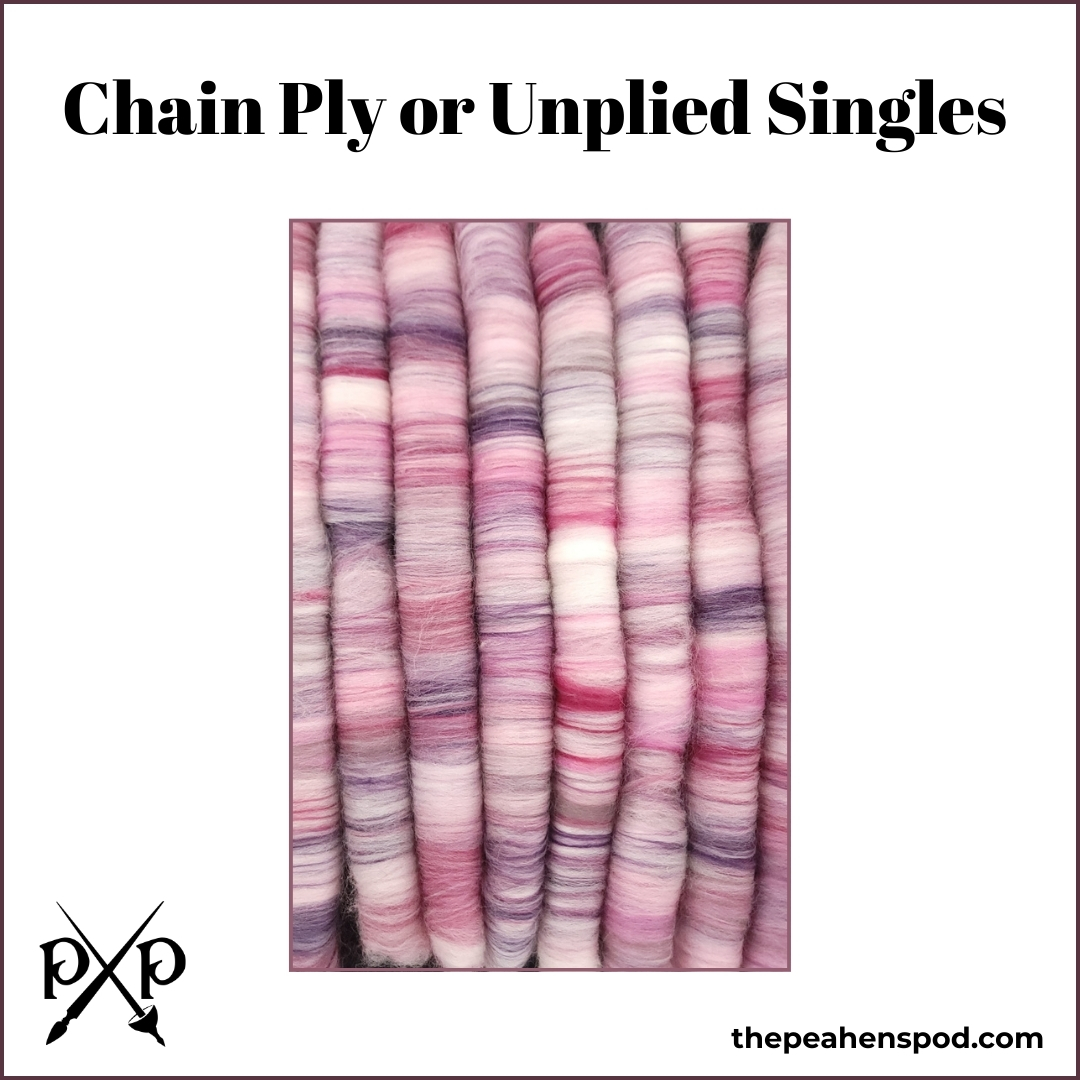
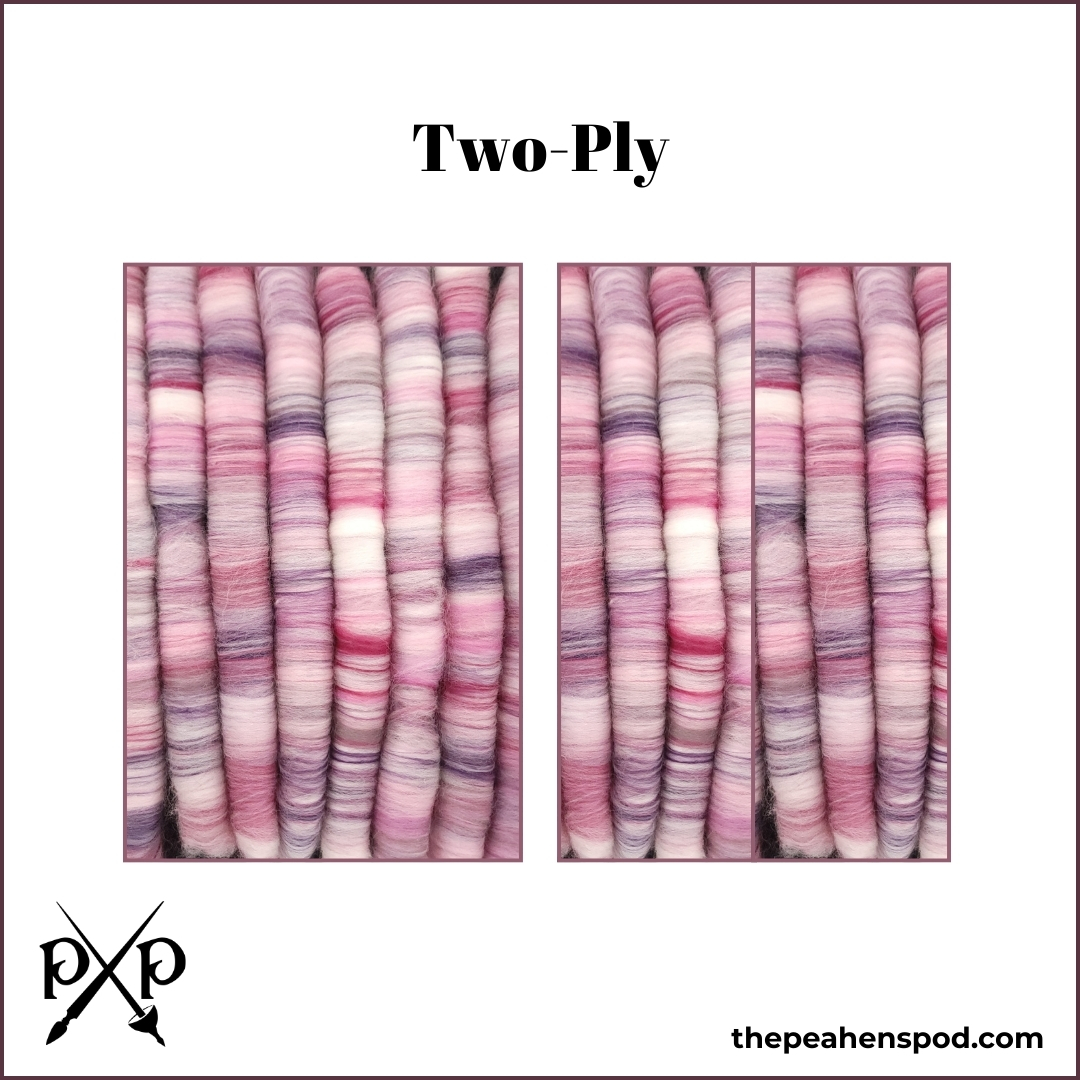
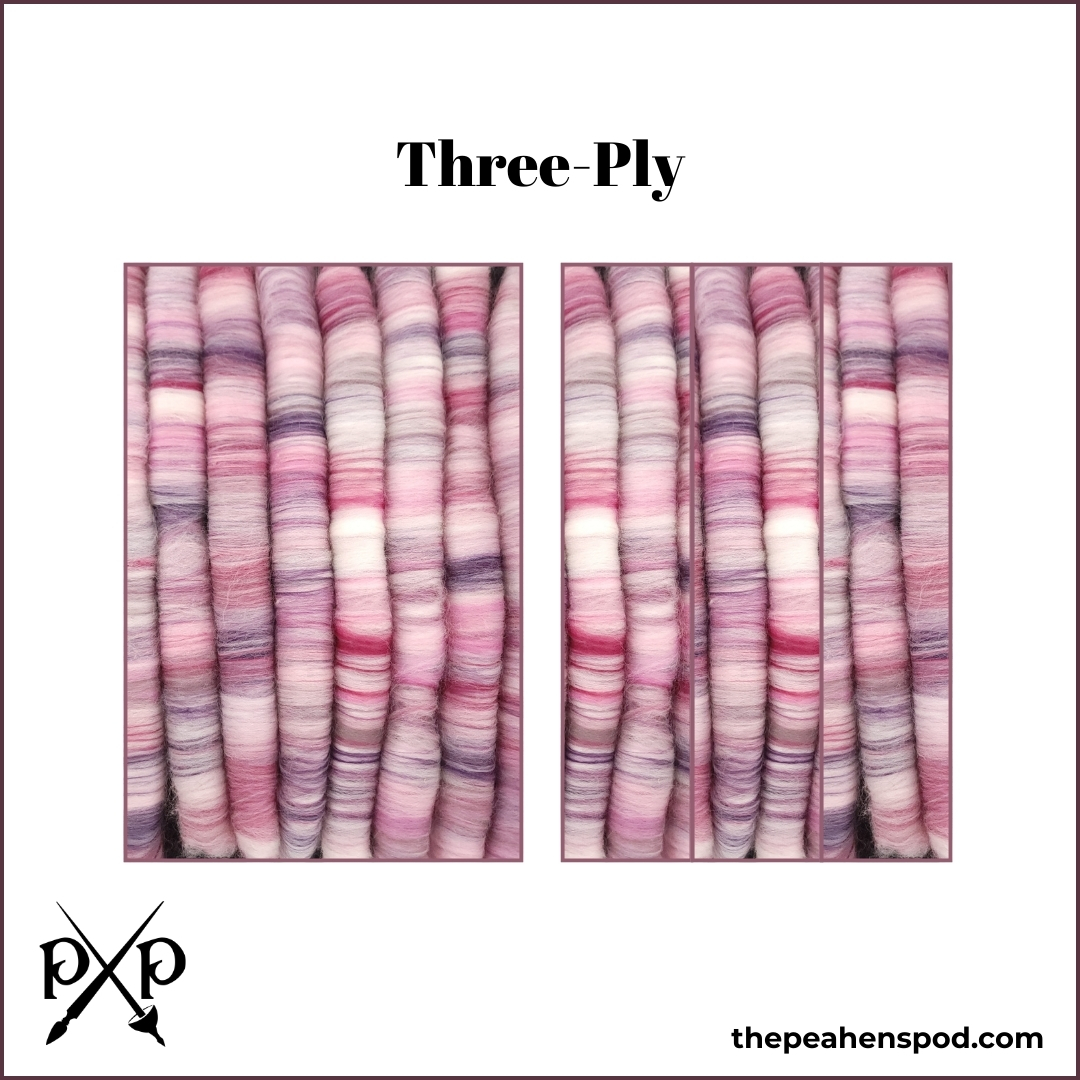
In addition to zero forethought, many of my uglier yarns suffered from a poor understanding of color theory. In this case, I figured any spinning and plying approach would produce a harmonious yarn because the pink and purple colors were analogous—that is, located close to one another on a color wheel. I have a bad habit of pairing complementary colors in a way that spins up muddy-looking; thankfully, that wouldn’t be a factor here.
My other recurring yarn design flaw: barber-poling. I realize many fiber artists don’t share my distaste for striped yarns caused by singles with very different tone values. And I don’t mind some marling from colors with similar tones. You can check tonal range by taking a photo of the fiber in black and white, or converting an existing photo to black and white. Be careful using filters in a photo editing app, because they can create inaccurate representations by exaggerating the amount of light or dark in the photo. If you’re following along in Canva, my favorite approach is to use the Edit feature to turn the saturation all the way to zero.
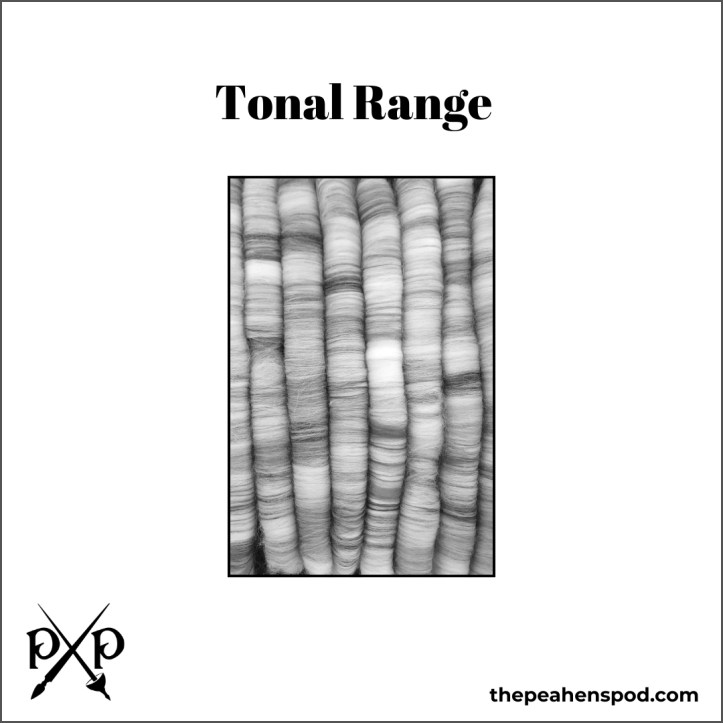
Ooof. Barberpoling would be inevitable, no matter how I spun these rolags. The different colors would blend some while drafting, and optical blending could help soften the transitions between light and dark, but there was no getting away from a marled result in this yarn.
What’s a spinner to do? Conduct a study, of course!
I divided the 12 rolags into four groups of three each in order to spin the following the following four samples:
- A chain-ply
- A three-ply from three separate singles
- A two-ply from two separate singles yarns
- An end-to-end two-ply created from one singles yarn plied to itself
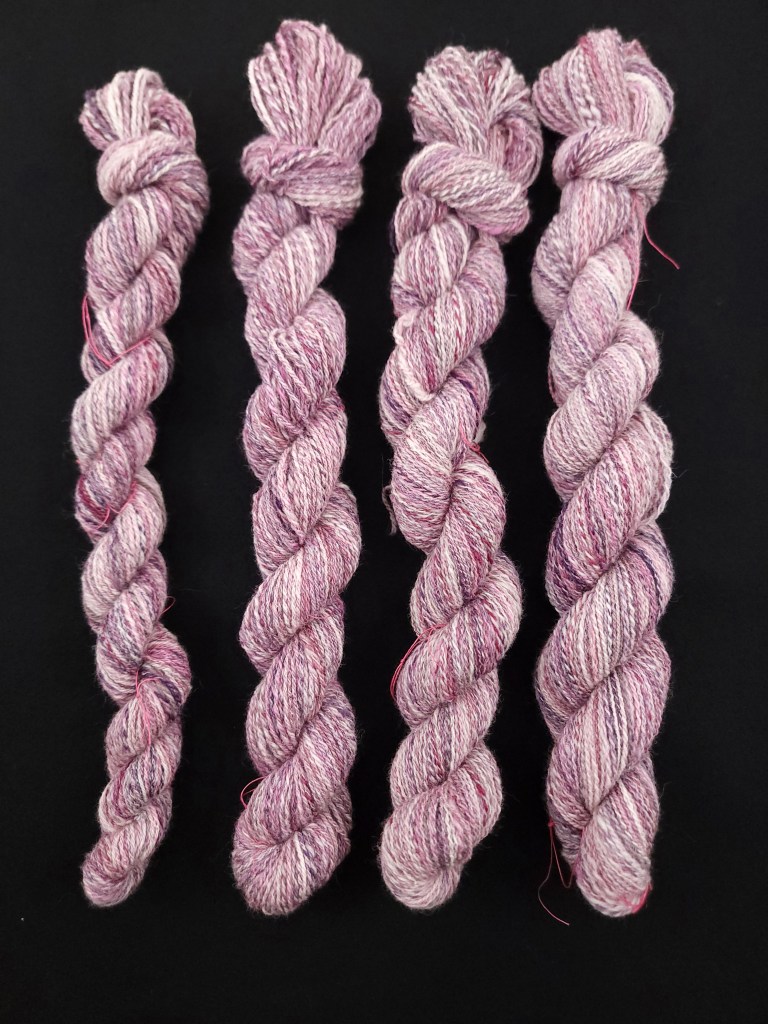
Left to right, the samples show: chain-ply, three-ply, two-ply from two separate singles, and the end-to-end two-ply. Closeup photos and details follow for each sample.
Chain-ply: three rolags spread across two spindles. I used a plying ball to control the length of the chains so the colors would have some separation from each other in the final yarn. The chain-ply had the benefit of using all the singles yarn so there was no waste to deal with, and this approach has become my go-to solution for any yarn that I forgot to plan ahead of time. (Which is still a lot of them!) Unfortunately, I failed to weigh the four groups of rolags, and as a result this sample had less fiber and ended up much shorter than the other three.
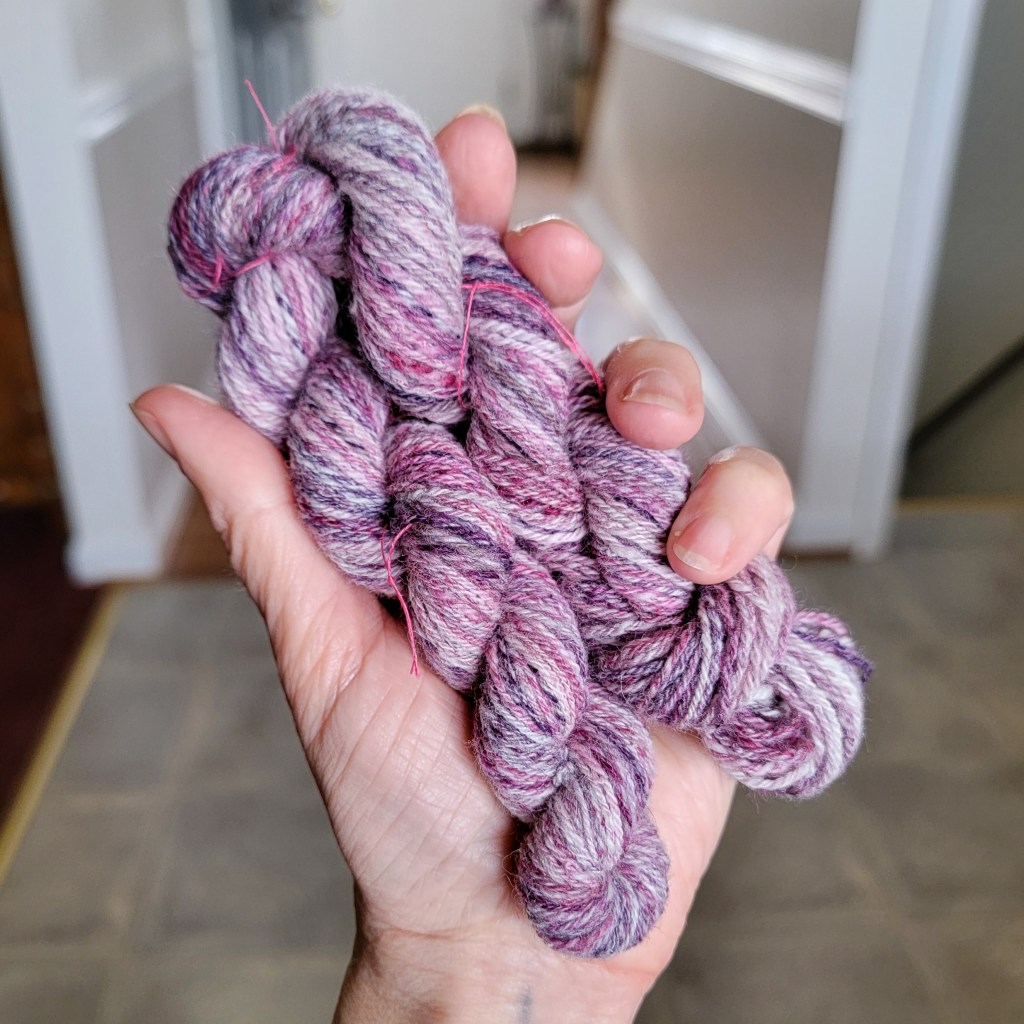
Chain-ply yarn stats: 84 yards, 21.5 grams, 1,772 yards per pound (YPP), 14 wraps per inch (WPI). Estimated sport weight yarn.
Chain-ply yarn impressions:
- I was very happy that the yarn ended up thicker than lace weight.
- I especially appreciated the lack of leftover singles yarn.
- However, the pooling of the colors—usually an advantage of chain plying—didn’t appeal to me as much as I expected.
Three-ply: three rolags spread across three spindles. I should have tried to divide the fiber by weight across the spindles. As it was, one spindle ran out very early compared to the other two. I continued with a two-ply until I emptied a second spindle. The last remaining spindle was set aside to eventually add to the other samples. Honestly, even if I had split the rolags perfectly, this approach tends to result in leftover singles.
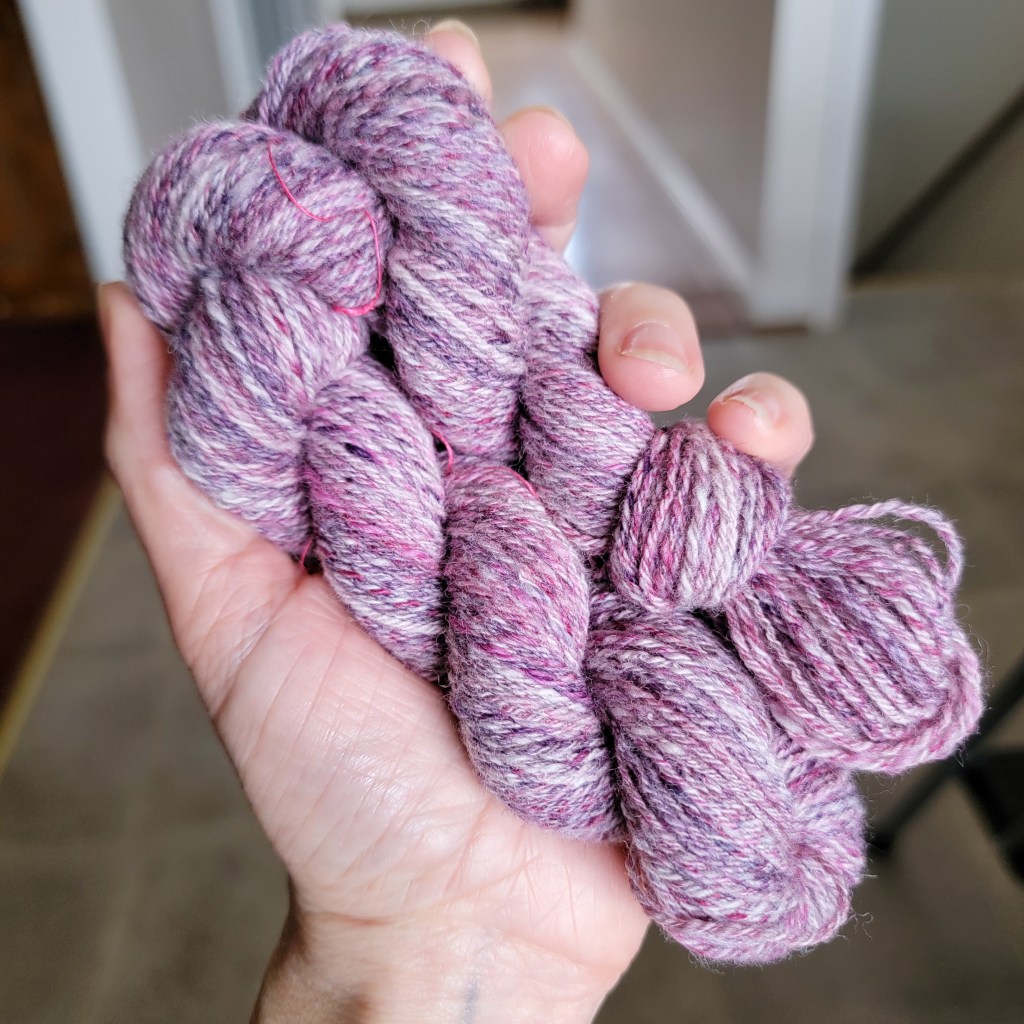
Three-ply yarn stats: 116 yards, 32.3 grams, 1,629 YPP, 14 WPI. Estimated sport weight yarn.
Three-ply yarn impressions:
- I expected the chain-ply and three-ply yarns to have the same grist, even if they had different lengths and weights (based on the uneven amounts of fiber in the two samples). I am not sure whether the different grists—1,772 YPP for the chain-ply and 1,629 YPP for the three-ply—is due to the inconsistency of hand spinning, or somehow the chain-ply was really less dense. Perhaps the yarn resisted folding backwards on itself and the pressure to straighten back out changed the grist? Definitely worth further investigation.
- I liked the look of the three-ply better than the chain-ply, but I found it frustrating to deal with the leftover singles.
Two-ply from two singles: three rolags divided in half by weight and spread across two spindles. This time I tried being conscientious about having the same amount of fiber for the two singles yarns and guess what? One spindle still ran out too soon. Luckily, I still had leftovers from the three-ply, which I added to this yarn. Ironically, the second spindle of the two-ply ran out before the last spindle of the three-ply so I still had yarn on that same spindle.
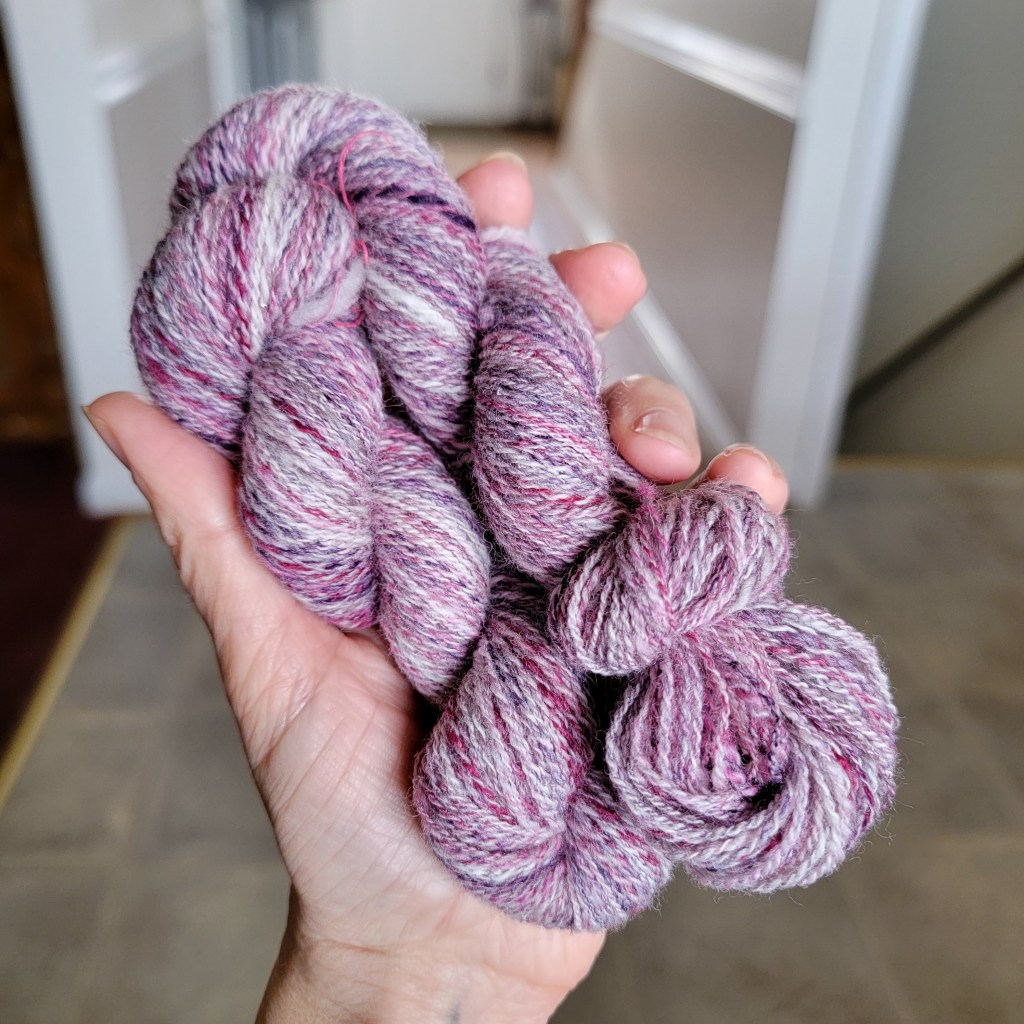
Two-ply yarn stats: 216 yards, 33.5 grams, 2,925 YPP, 19 WPI. Estimated lace weight yarn.
Two-ply yarn impressions:
- There’s nothing wrong with the two-ply, but I found the three-ply balance of colors and optical blending much more pleasing.
- Additionally, I would prefer to have thicker yarn and a three-ply does a better job of accomplishing that goal with how thin I spin my singles yarns.
- I was surprised to notice that even though the weights of this skein and the previous one was similar, the three-ply was not automatically 2/3rds of the length of the two-ply. This may be due to how the separate strands in a three-ply nestle in closer to each other, creating a shorter yarn than math would have suggested.
- Last but not least, I was annoyed that despite careful weighing, I ended up with uneven yardage on the two spindles. Did it really matter? No, since I had leftover yarn from the previous sample. But it was aggravating all the same.
End-to-end two-ply: three rolags spread across two spindles. I wound the singles yarn into a center-pull cake, and then decided to add the final spindle of leftover yarn to it as well. This ensured that absolutely no spun yarn went to waste. This method could also be done with a center-pull ball wound on a nostepinne, or a plying bracelet tool (sometimes referred to as Andean plying).
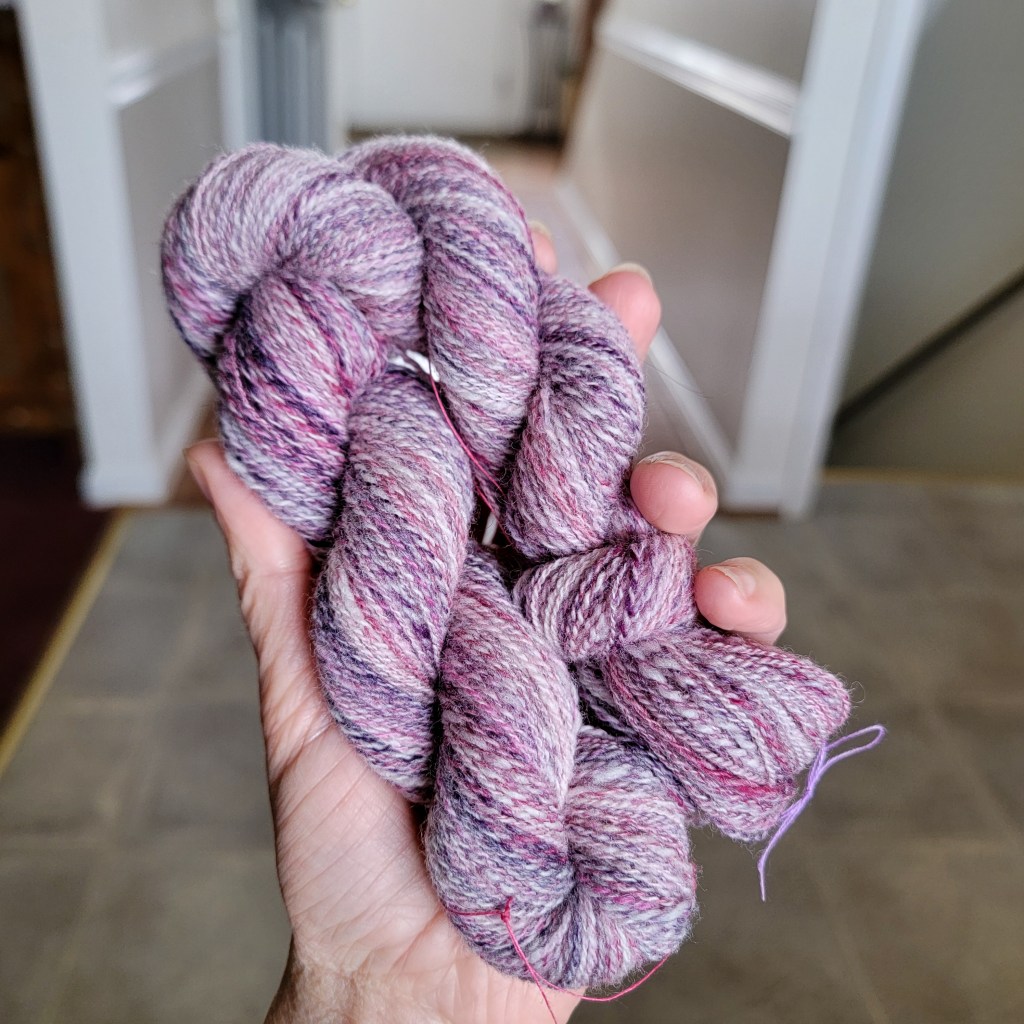
End-to-end two-ply yarn stats: 194 yards, 31.7 grams, 2,776 YPP, 18 WPI. Estimated lace weight yarn.
End-to-end two-ply yarn impressions:
- The grist ended up differing between the two two-ply samples, just like it did between the chain-ply and three-ply yarns. You could argue, I suppose, that 159 yards of lace weight yarn is statistically insignificant but I still plan to keep better track going forward as I learn more about grist and yarn density.
- I am glad that the center-pull cake resulted in zero wasted yarn, but I found it extremely tedious to keep the cake from collapsing in on itself. I used a nostepinne to help keep the center open to prevent a tangled knot from forming.
- For these rolags, the only advantage for an end-to-end two-ply was ensuring all the yarn was used. Visually, I cannot tell this yarn from other two-ply, and I had to tie an extra purple string to the skein to know which was which.
After comparing the four samples, I believe that I will chose the three-ply option in future similar fibers. Even though it had the greatest amount of potential yarn wasted via leftover singles, I was happier with the color blending and the sport weight of the final product. This would probably work better than a three-ply gradient (like the Tickled Pink yarn) because there is no color progression to get out of sync between the three singles.
Note: Special mention in this post goes to the Tiny Fibre Studio Grist Calculator. Yes, I could do the multiplication myself to convert yards per gram into yards per pound, but it was handy having an online calculator to calculate the result for me. I also like how the calculator offers an estimated weight of the yarn based on the grist.
 The Peahen's Pod
TJ, this may not be kosher but, when playing and I run out of one single, I finish off my remaining spindle by leaving the strand attached and winding off the remaining single for Andean plying, and then ply that last portion onto itself. This continues the yarn to the end, and nothing is left.
LikeLiked by 1 person
I think as long as there weren’t color problems (like I ran into with the Tickled Pink yarn), a plying bracelet + chain-ply combo like you described would probably work!
LikeLike
When I run out of a single in a 3-ply, I make a plying bracelet from the longest single left and ply from both sides of it plus the next-shortest single. When one of those runs out, I create a loop (or the bracelet ply ends in a loop) and switch to a chain ply. So it’s a 3-ply with nothing left over. LOVE Hikari Handmade’s rolags.
LikeLiked by 1 person
It must be a great idea because you’re the second person to suggest it 😂 I’ll plan on this approach going forward for three-ply yarns!
LikeLike