
At long last, here are the results from my first batt spinning. The entire yarn was spun and finished in the course of the gratitude spinalong that I hosted on the Spanish Peacock Flock Facebook group during November 2023. Unfortunately, this post was delayed because the holidays interfered with my writing plans.
One of the best parts of this spin was playing with the UV reactive fiber and spindles. The fiber colorway was appropriately named Uranium Glass, and the yellow parts lit up under black light just like their namesake. For the spinning tools, I settled on four matching black locust Spanish Peacock Russian lace spindles. Black locust (Robinia pseudoacacia) is an strong, fast growing tree with fragrant May blossoms and lumber that naturally glows under black light!

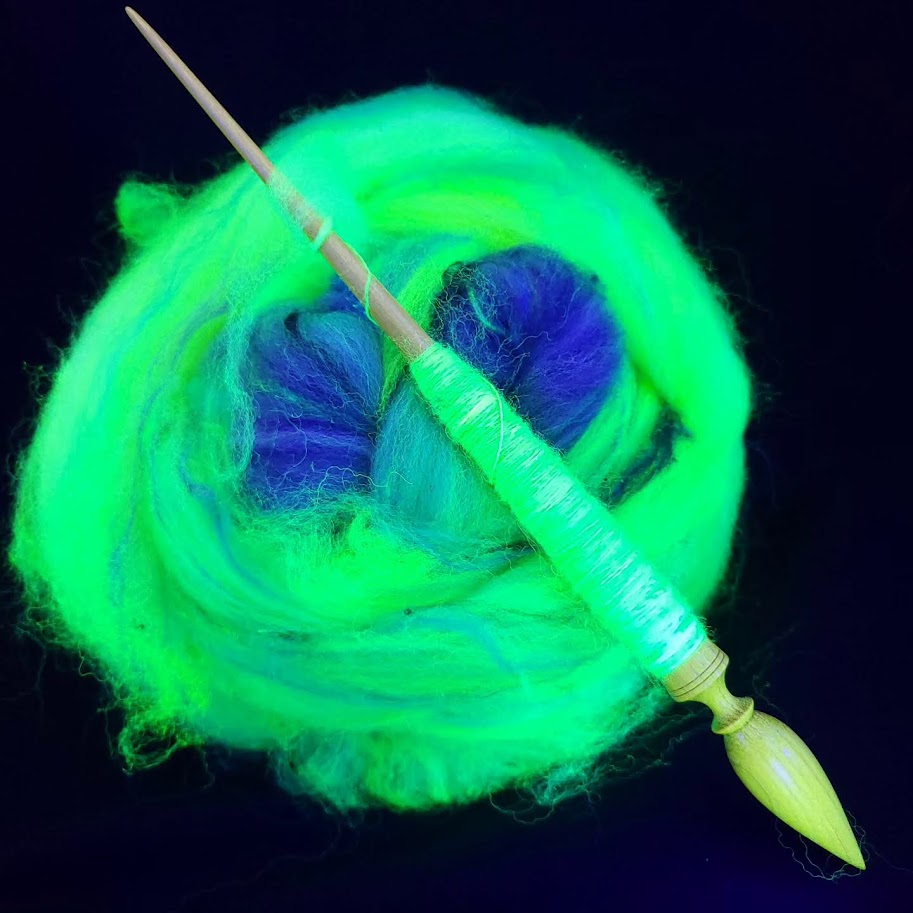
I’ve often wondered whether black locust sawdust could be used to create a UV-reactive natural dye… clearly more research is in order!
While I typically gravitate towards whorled supported spindles, primarily beads and ninjas, I don’t mind using Russian lace spindles on some occasions. For this spin, I planned to use only four spindles for over four ounces of fiber, meaning each one might have to hold over an ounce of spun singles. My hand strength struggles when the combined weight of spindle and cop approaches two ounces, so using very light Russian lace spindles—all weighed between 18 and 21 ounces—seemed like a good choice.
One of the things I love about supported spinning is how portable it is. I took my spindles and fiber everywhere with me during November, even camping at the future home of the Cedar Springs Fiber Arts Center and Retreat.

People often ask how long it takes me to spin yarn on a supported spindle. In this case, I had finished the first of the two batts—a little over two ounces—in 12 days.

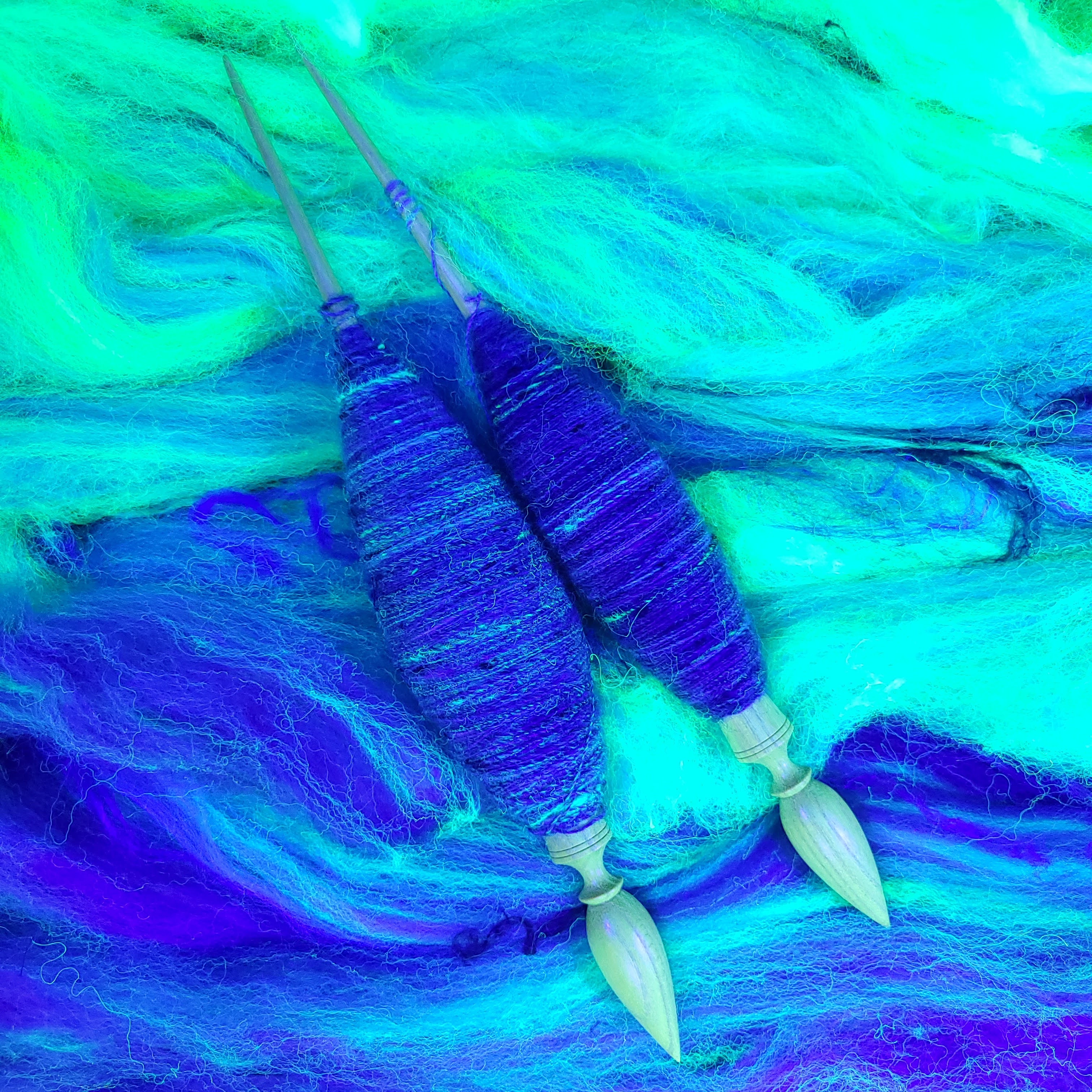
My pace apparently picked up, however because by day 16, just four more days, I had filled another spindle. So I average between four and six days to spin about an ounce of fiber.

By day 21 I was nearing the finish line…

And by day 22, all spindles were full! This means on average, it took about 5.5 days to finish an ounce of fiber. I realize that’s an eternity compared to the speed of wheel spinning. However I have so few opportunities to sit down at a wheel and really focus on what I am doing. While for many people wheel spinning is automatic, I still struggle especially if there are any distractions. Maybe I will master a wheel someday, but for now I will keep using my hand spindles!

The next step was to wrap a plying ball. A plying ball aligns the singles yarns in a separate step from adding twist. I use plying balls with most of my spins now. Even though it takes more time, I’m much happier with the finished yarn when I can focus on adding the right amount of balanced twist without also fighting to get the singles lined up. This photo is blurry because I was focused on recording videos of the process for a series of Instagram reels, and I forgot to take an actual photo of the wrapped plying ball. I had to resort to a screenshot of a video!

I’ll share links to the Instagram reels in a separate post because the plying ball process merits its own discussion. Apologies in advance to those who don’t have Instagram and can’t watch the reels. Maybe during my next spin, I’ll record a video specifically for the YouTube audience.
As often happens while spinning, one singles yarn ended up way longer than the other one. A significant amount of yarn remained, and I wasn’t about to lose that much yardage! So I used a small nostepinne to wrap a center-pull ball with the remaining yarn, and then continued wrapping the plying ball. By feeding both from the inside and outside of the ball, I was able to save every last inch of that precious fiber! It’s hard to explain in words how this worked, although I can say it was very tedious. The video will make it more clear when I post it.
Once the plying ball was done, I used my eSpinner to add twist to the two aligned singles.

After that, a bath and some good thwacking helped set the twist to finish the yarn. Here is one final glamour shot of the four spindles with the completed yarn.
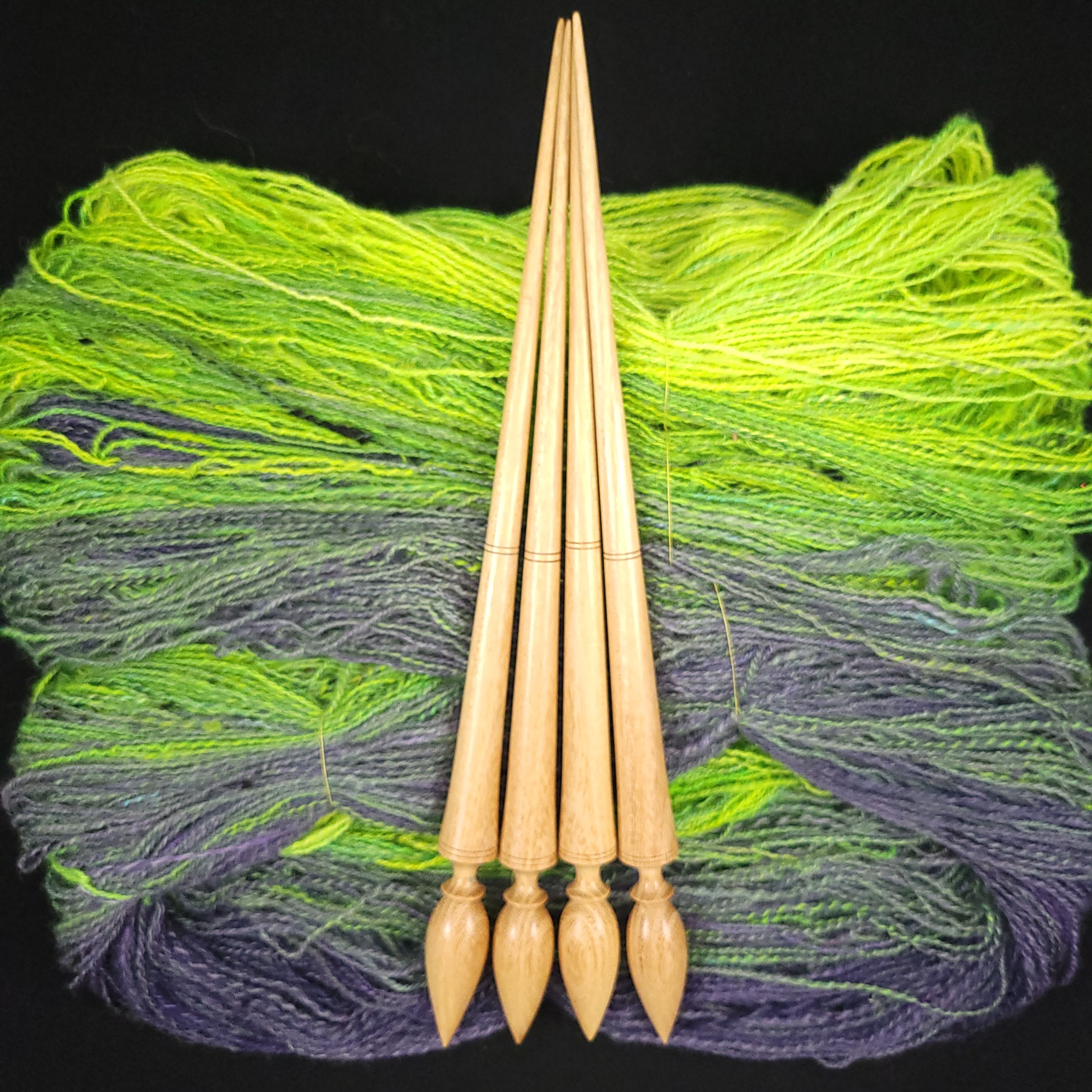

The 530 yards of finished yarn ended up measuring about 24 wraps per inch, which could be fingering or lace weight depending on which yarn weight chart you consult on the internet.
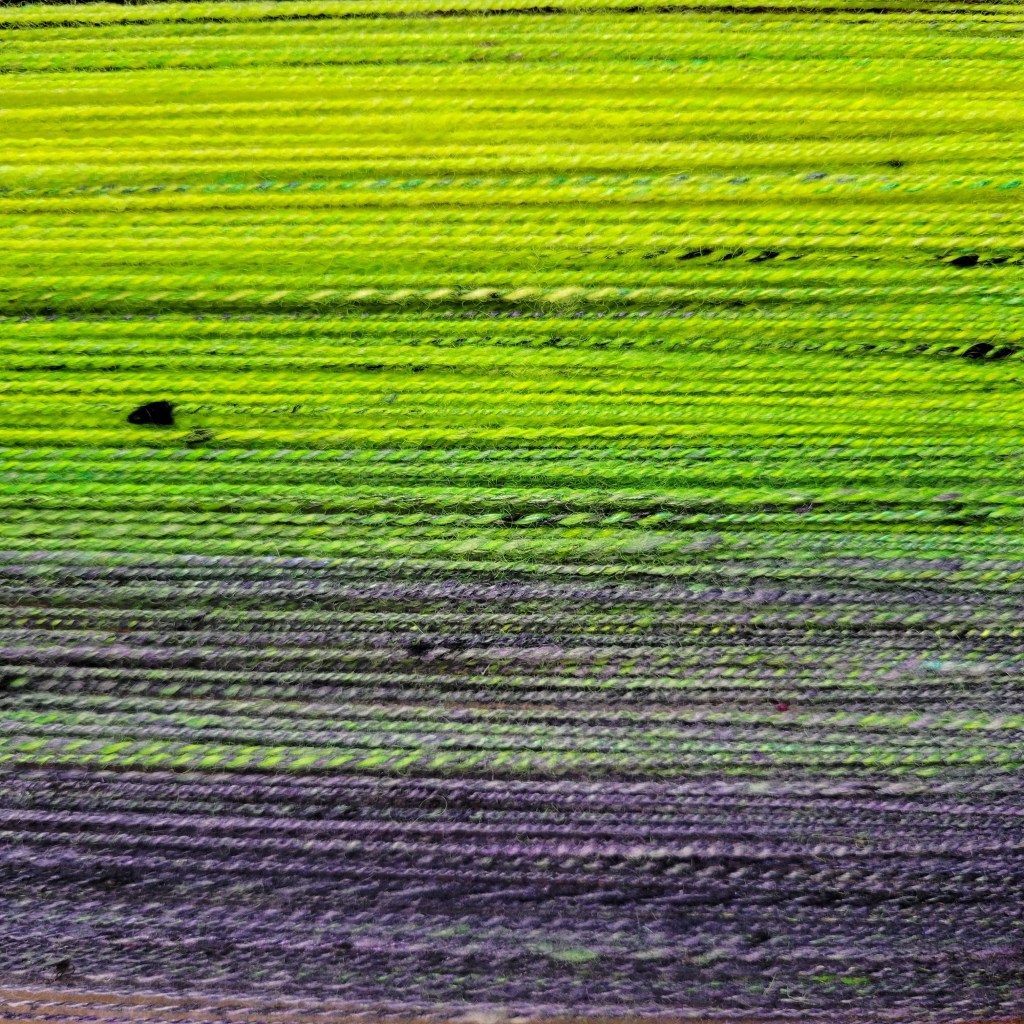
As always, one final question continues to plague me…what will I do with the finished yarn? If you have any suggestions, I’d love to hear them!
 The Peahen's Pod
Fantastic!!
LikeLike
What about Zuzu’s Petals or the September Circle Cowl or Shattered Sun shawl? Or any of Martina Behm’s shawlette patterns would be fun!
LikeLike
Thanks for the suggestions – I’ll check those out!
LikeLike
[…] this year, I promised to post about plying balls. Then new projects cropped up, things got busy, and the whole idea slipped my […]
LikeLike