
I decided early on to spin Tickled Pink entirely on Spanish Peacock ninja supported spindles.
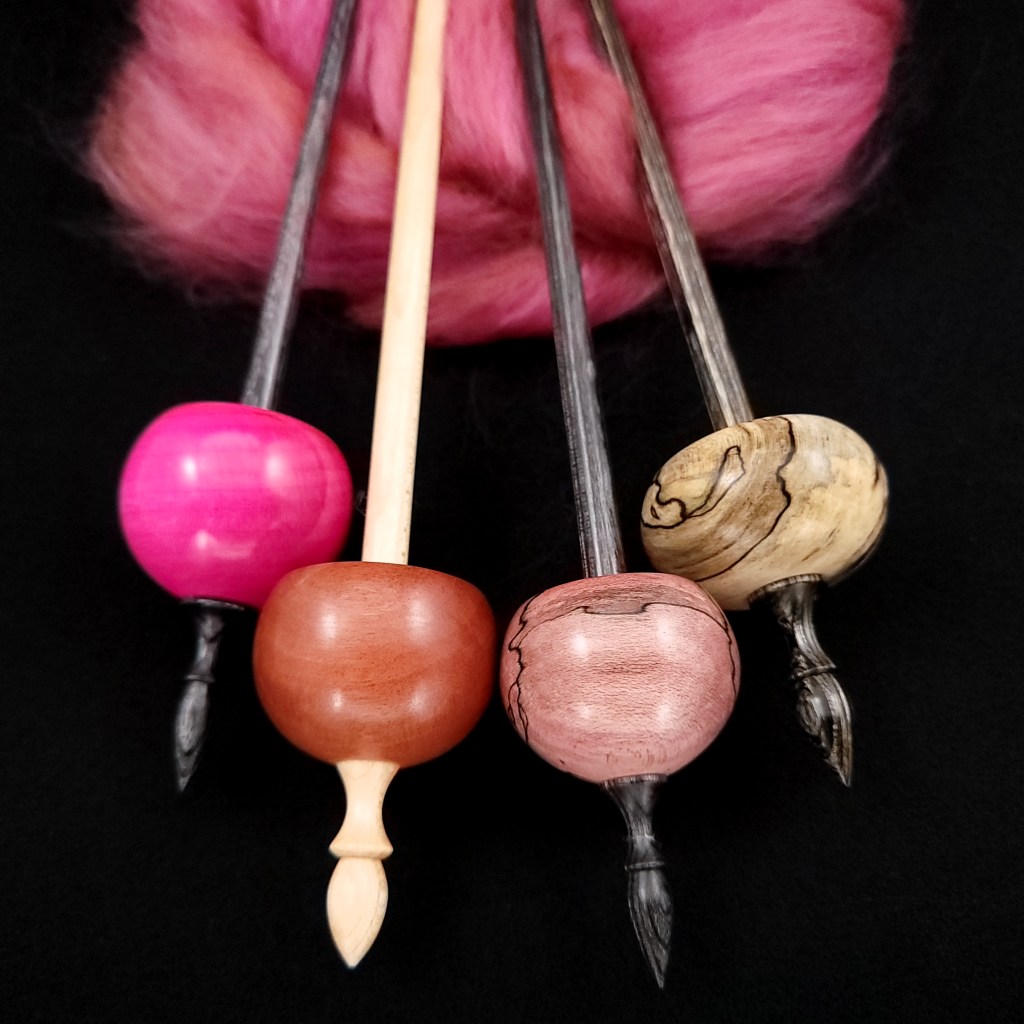
This choice should surprise no one.
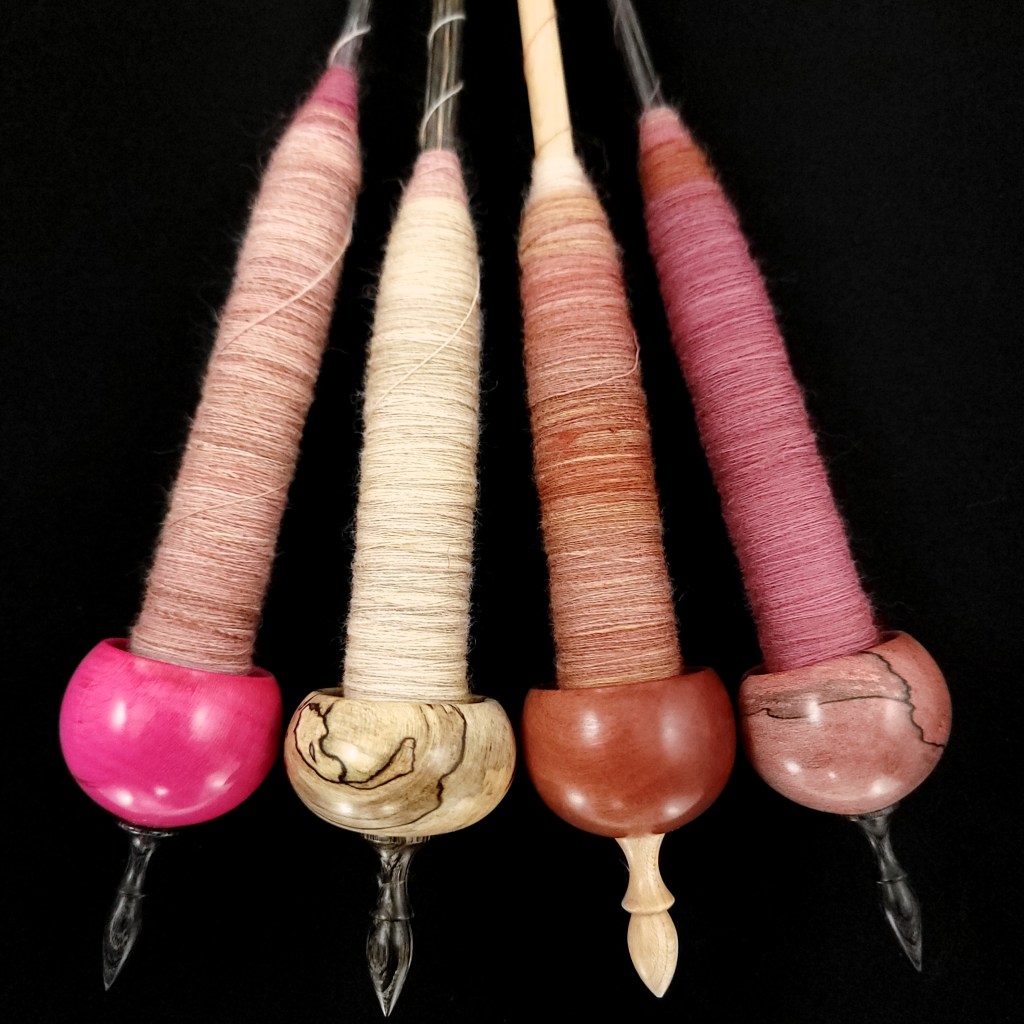
But I plan to use the same four spindles for the entire spin.
Has my hand strength and tight-cop winding really achieved such a level to fit 150 grams of fiber onto only four spindles?
No, in fact the opposite is true. My plan is to fit only one singles yarn—approximately 50 grams—across the four spindles. Then I will reel the yarn onto a metal straw for storage and start over for the next singles.

Actually, Mike will help a lot here, with his handy cordless drill. While I could use my Daedalus Starling to perform a similar task, I have more metal straws than empty Starling bobbins.

Why only four spindles? My reasoning is twofold.
First of all, many supported spinners—especially those new to the art—don’t have a huge flock of spindles for a large project. And frankly, you don’t need one. Extra planning and some ingenuity goes a long way. Honestly, power tools help as well!
My second reason? I have joined the “Stop Overloading Spindles” Team. That’s right, after years of pushing myself to fit 28 grams of fiber onto each supported spindle, I finally realized the error of my ways.
I thought my hands hurt more as the cop grew heavier because my hands needed to be stronger. It’s more than that. Lighter supported spindles (generally) spin faster, and as the weight of the cop increases you have to flick more often to put the same amount of twist into your yarn. So your hand works harder to move the spindle and has to flick the spindle more to get the same amount of twist. This whole time I had been creating needless work for my poor hands, and for what? Bragging rights?
This spin will demonstrate that it’s not only possible but even preferable to keep the cops light and—at the same time—to use only four spindles to spin 150 grams of fiber.
Stay tuned for the Tickled Pink Retrospective, which will be posted after the spin is finished and the yarn is done. At my current rate of spinning—19 days for the first ply—look for this update sometime in late May or early July!
 The Peahen's Pod
another great piece about your plying project. I need to clarify, do you have bobbins on the steel straws that you are winding onto?
Sent from my iPhone
LikeLike
No bobbins – I am winding directly onto the metal straw. With the stoppers on the ends, the straws fit perfectly into my Spanish Peacock plying stand.
LikeLike
Ahhh, stoppers! That’s what they were!! And you now rewind into the straws vs sliding them from the spindle to the straw.
Thank
You, I seem to be slow on the uptake here. 🙂
Btw, are you doing Frederick Fest this year?
Sent from my iPhone
LikeLike
We’ll be attending Frederick Fiber Fest as regular people – how crazy is that?
My updated approach for handling the fiber after spinning and before plying probably merits its own blog post. Thanks for asking the questions that gave me the idea! Sliding the cop off the spindle onto the straw doesn’t work very well when you wind tight cops, and it also doesn’t give a chance for the twist to even itself out like rewinding (or reeling) does.
LikeLike
[…] I realize this photo looks almost identical to the end of the first ply, shown here. I thought I had selected the wrong photo, but the grain of the spindle whorls is slightly different […]
LikeLike