
Yes, you read that right.
My final plying work in progress (WIP) that I finished for Tour de Fleece 2024 was eleven years old. If it were a child, it would be in 5th or 6th grade by now.
This was my original photo of the fiber and supported spindle prior to jumping into the spin. Sorry for the grainy photo texture. Cell phone cameras have come along way in the past 11 years!

(Spanish Peacock spindles have also evolved a lot in that time!)
Based on photographic evidence, this Blackbird Gradient braid may have been my first attempt at prepping fiber prior to spinning. Instead of spinning the gradient end to end, I divided the braid into fourths so I could spin two singles from black to green then blue, then back to black.
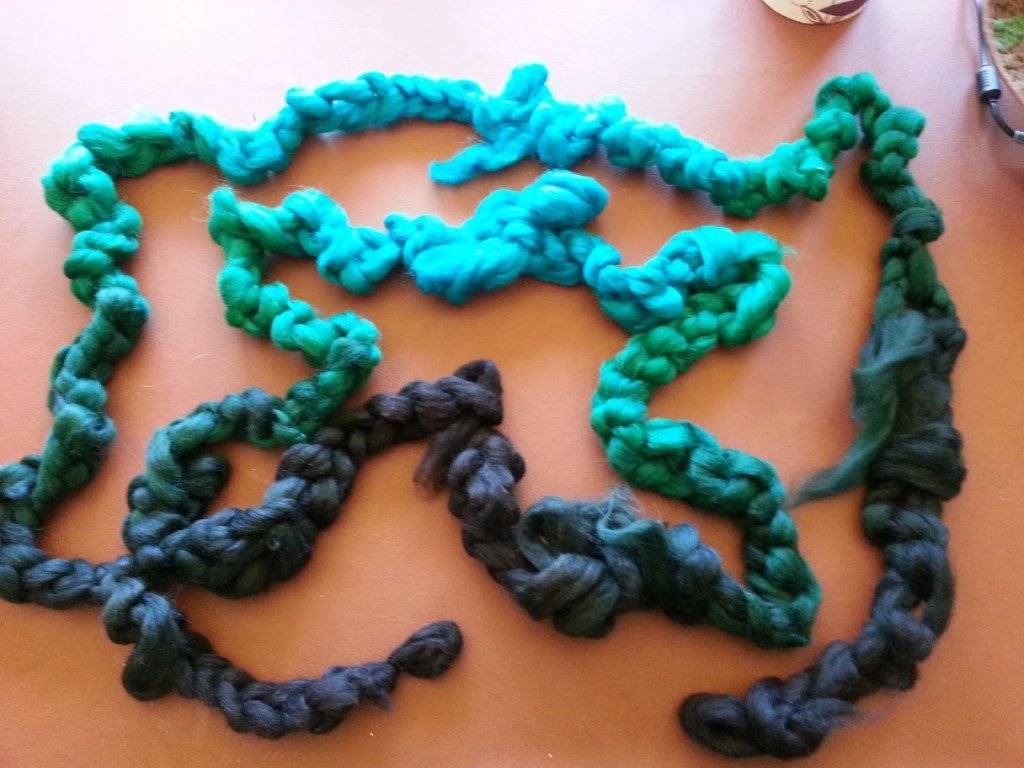
Unfortunately, the black ends doomed this poor WIP.
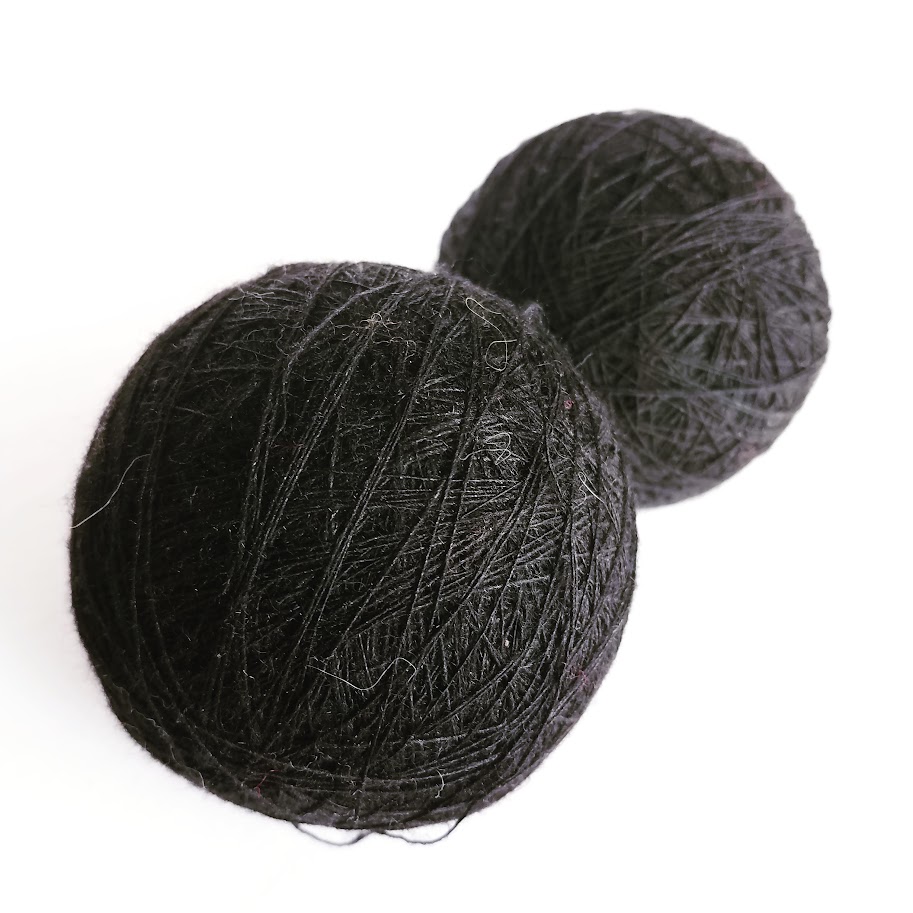
As best as I can tell—my record keeping in 2013 was even worse than in 2024—I used the same spindle to spin both singles. When finished, I wound the each singles into a ball until I was ready to ply. This was a bad idea for two reasons. First, I have heard that balls are terrible for long-term yarn storage, since the shape can cause the fibers to stretch inconsistently. Second, I lost track of the singles because they looked like any other two balls of black yarn shoved into my craft closet.
For. Six. Years.
One of the missing balls turned up in September of 2019. I only figured it out because of a small turquoise slub amongst all the black. In April 2020, I finally located the second singles.
Did I ply right away? No, of course not.
I made my first attempt at plying the yarn in late 2021, after I had gotten an EEW6 eSpinner. That little machine was going to fix all my plying problems! Unfortunately, the singles kept breaking as I fed them into the orifice. I’d have to stop the eSpinner and fish the broken bits back out to join them with another piece of singles. Then repeat the process. Over. And over. I finally gave up, and shoved the poor WIP back into the craft closet. I had no idea why the singles kept breaking. Maybe I spun too thin back in 2013? I was still relatively new to supported spinning back then, so it seemed a plausible explanation. Or maybe the fiber had started to degrade after years of neglect? I put the problem out of my mind.
Enter the plying ball. If you’ve read my ode to this technique, you already know how this story ends. This time, I took the time to wind those fragile singles onto a third ball. Every time a singles broke, I could carefully and methodically overlap the broken ends alongside the other singles. Thankfully the two never broke in the same place. As I worked, I realized that the yarn wasn’t breaking as I pulled on it—it was already damaged.

The breaks were clean—the ends almost blunt—so they didn’t appear to be from spinning to thin or the fiber breaking down. Since the damage went all the way through the singles, I assume it was caused by insects rather than abrasion or an encounter with the resident feline.
Once the plying ball was finished, I proceeded to add twist. Unlike the previous Tour de Fleece 2024 yarns, I opted for a Spanish Peacock pu yok, rather than an eSpinner, to finish plying. I found that using a hand spindle made it easier for me to monitor how much twist I put into the yarn.
If you’ve ever wondered what four ounces of yarn looks like packed onto a supported spindle, now you know!

I finished the yarn with my usual method: soaking, thwacking, and then reskeining once dry. After 11 long years, my Tour de Fleece 2013 spin now has an honored place among all the other finished yarns in my collection.
Summary:
Blackbird Gradient by Fiber Optic Yarns
- Started spinning 6/29/2013
- Finished spinning: unknown but likely also 2013
- Finished plying 8/14/2024, 11 years later
- 720 yards, two-ply at approximately 18 WPI
- Spindles freed: zero

If you haven’t already read them, here are links to my other posts for Tour de Fleece 2024:
 The Peahen's Pod
[…] Tour de Fleece 2013 […]
LikeLike
[…] Tour de Fleece 2013 […]
LikeLike
[…] Tour de Fleece 2013 […]
LikeLike
[…] Tour de Fleece 2013 […]
LikeLike
[…] Tour de Fleece 2013 […]
LikeLike
absolutely beautiful and shows what perseverance can do! Great job, TJ! My only question for your final stats is what was the final weight in ounces/grams?
LikeLiked by 1 person
The braid was sold as “four ounces”, but I didn’t weigh it before spinning to confirm the accuracy. The weight of the finished skein is 4.18 oz or 118.5 grams, so I guess those pesky insects didn’t eat too much of it!
LikeLiked by 1 person