
The next-to-last yarn in my Tour de Fleece 2024 plying parade started on this very blog two years ago. That’s right, it took me 21 months to finish the yarn from the Fiber Prep Spinalong. (Plus another three to write this blog post.)
For the Fiber Prep spin, I deconstructed a five ounce braid of Haunui New Zealand Halfbred/ A1+ Mulberry Silk from Allons-y Fiber Arts to change the color progression, add glitz for some sparkle, and blend the fiber into rolags prior to spinning. I kept meticulous notes about my plan for the fiber, which is unlike me, and I even documented the entire spinning process. Apparently in that post, I even predicted that plying might take as much as two years.

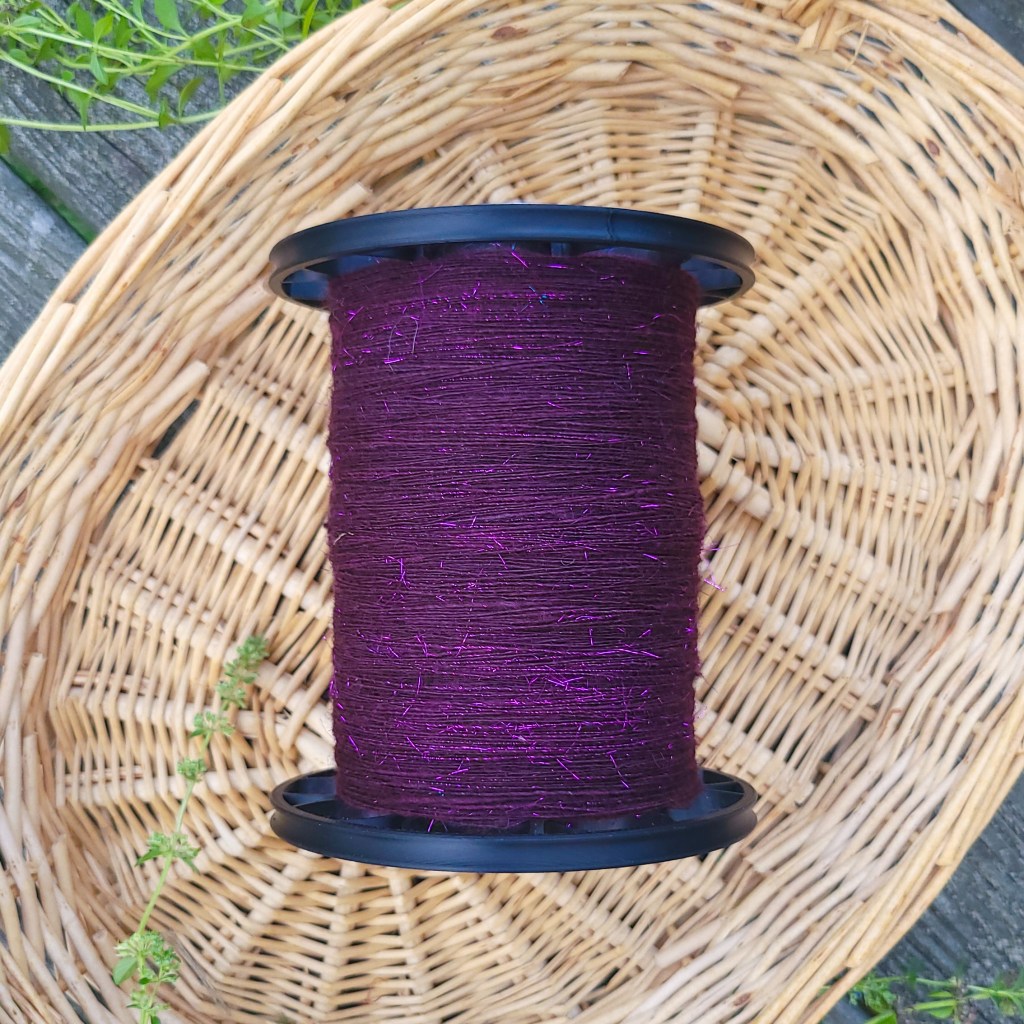
In my expert opinion, your spindle-spun singles may have rested too long if a spindle looks like this when you finally decide to ply.

What was my plying block this time?
As I sat down to write this blog post, I couldn’t recall anything that would have led to this extreme degree of plycrastination, especially compared to the previous Tour de Fleece WIPs which either had zero plan, or for which I had neglected to write down my plan.
How quickly we forget!
It wasn’t long ago—early 2023—when I realized the power of plying balls. I know, I know. You’re sick of hearing about them. But before that, every time I faced the prospect of chain plying my yarn, my heart would sink as I dreaded the frustration ahead of me. This year, by the time I reached this yarn during Tour de Fleece—it was the last WIP I started plying during the actual Tour—I had practiced the technique enough that I had conquered my fear. Even its memory had started to fade.
Here are the steps I followed for this particular yarn.
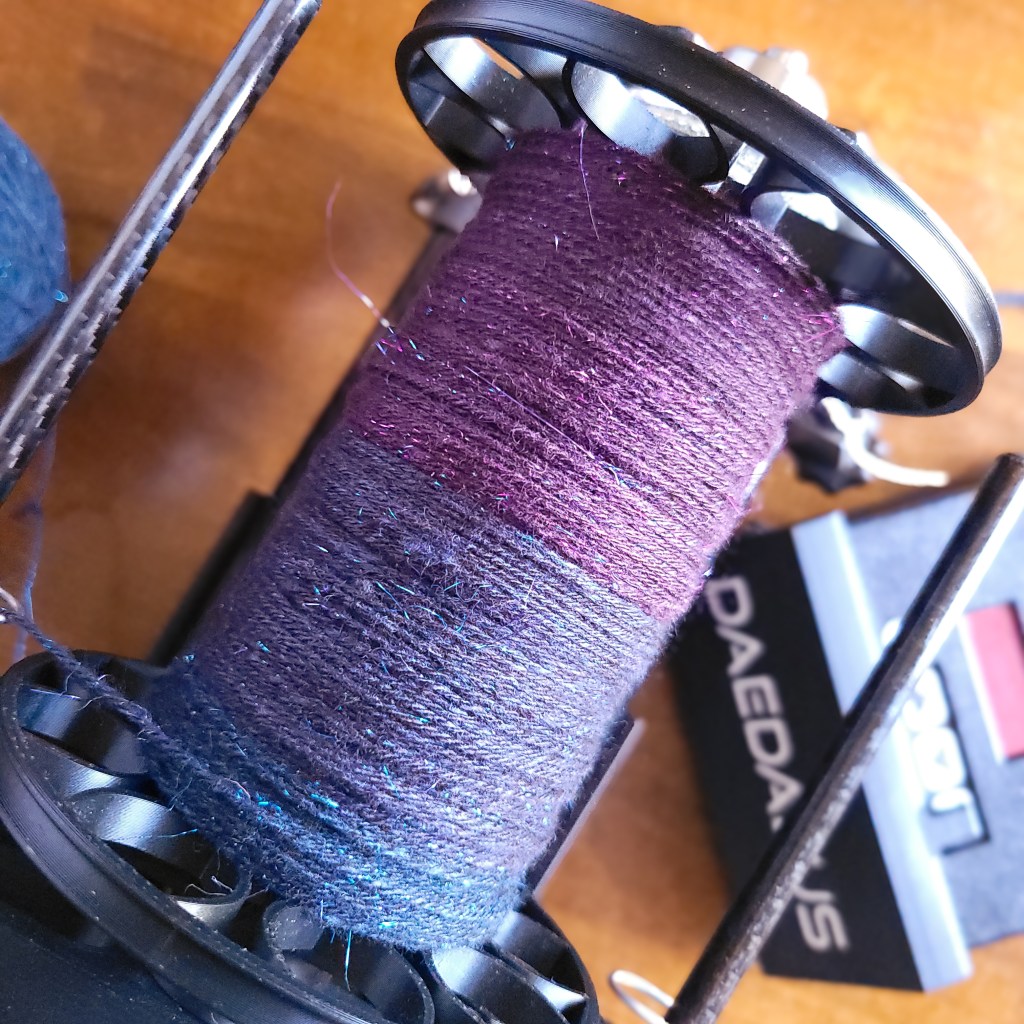
- I reeled the singles yarn off the spindles using my Daedalus Starling set up in bobbin-driven mode. This allowed me to join the singles from each spindle, and to even out the twist in the singles as well. I emptied the spindles in the opposite order I spun them, i.e., starting with the little Turk on the left above, and ending with the purple bead on the right. This is as far as I had gotten when the Tour ended.
2. I wrapped my usual chain-plying ball. I opted for relatively large chains to encourage gradual transitions between color blocks.
3. I added twist to the chained singles using the Starling, back in belt-driven mode.
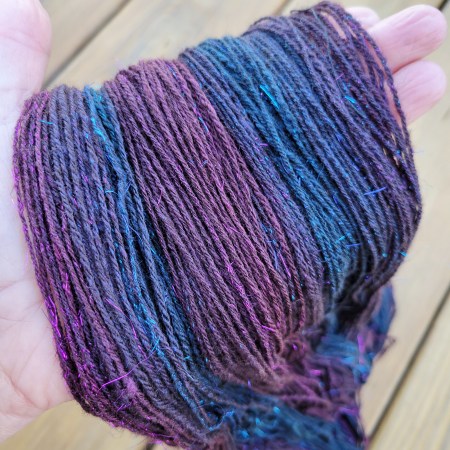
4. I finished the yarn with my usual soaking and thwacking method. I then reskeined the yarn after it dried, which both helped even out the lumps introduced by my niddy noddy and gave me an opportunity for a more accurate yardage count.
What will I do with this yarn? As I reread the original blog post, the seeds of an idea formed. The Fiber Prep spin was a direct response to my earlier Gradient spin whose long color transitions turned out to be boring for me to spin, ply and finally knit. I knit the Quaker Yarn Stretcher pattern using the original gradient, so I may knit a second one with this deconstructed gradient to compare the two versions.
Summary:
- Started spinning 10/1/2022
- Finished spinning 11/4/2022
- Finished plying 8/13/2024—closing in on two years of plycrastination
- 538 yards, chain-plied at 16 WPI
- Spindles freed: six
If you haven’t already read them, here are links to my other posts for Tour de Fleece 2024:
 The Peahen's Pod
[…] Fiber Prep Spinalong […]
LikeLike
[…] Fiber Prep Spinalong […]
LikeLike
[…] Fiber Prep Spinalong […]
LikeLike
[…] Fiber Prep Spinalong […]
LikeLike
[…] Fiber Prep Spinalong […]
LikeLike