
My next yarn saga features a colorway named Pavlopetri on Rambouillet by Fossil Fibers. Unlike the previous yarns, I completed this one entirely after Tour de Fleece ended. However, I still consider it part of this year’s WIP-finishing effort. I mean, I wanted to start plying during the Tour.
I just couldn’t remember how.

Fiber dyed in blues and browns are always tricky because of the possibility of making muddy colors in the final yarn. I learned this lesson the hard way with my mitt-a-long attempt four years ago. So I planned this spin carefully to make sure blues matched with blues and browns with browns.
My plying block this time? Not a lack of plan, but forgetting to write it down! I was sure I meant to spin a two-ply yarn. But once again, I didn’t have a photo, or any notes, about the color patterns in the braid. None of my Instagram posts of the spin in progress were any help. Did I split the braid in half, lengthwise down the middle? Or did I split it in half crosswise? Would the colors in the final yarn progress in one direction (A through B to C), or mirror themselves (A through B to C back to B then ending at A)?
Finally, after months of putting off a decision, I realized I needed the bog oak Tibetan (rightmost spindle, above) for a new project. If I was going to free up the spindle, I might as well ply. I turned to an expert: the artist behind Fossil Fibers. She was very patient in digging up her notes about the original dying pattern in the braid, and even sent me a copy of the original listing photo to help.
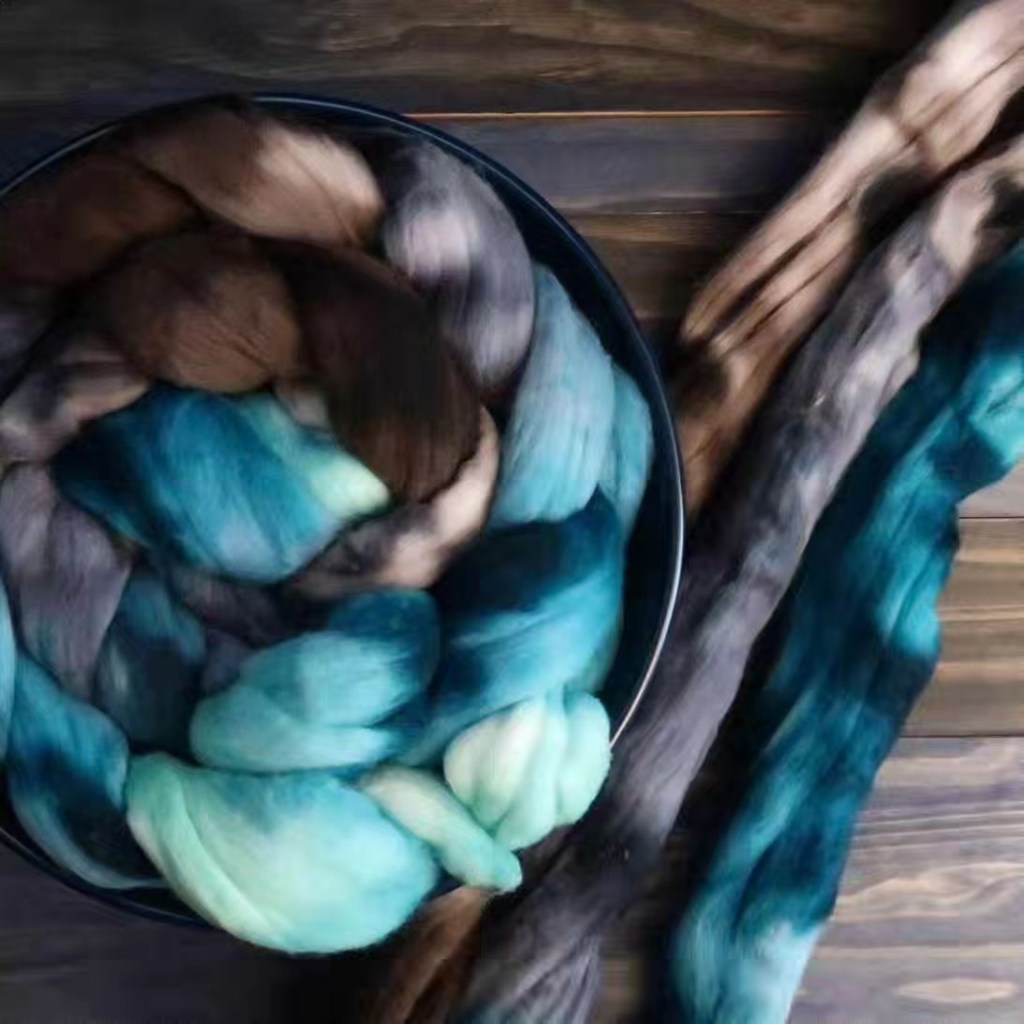
The conclusion: the colors were mirrored at the center of the braid: mint through gray to brown and then back again. I must have split the braid in half in the middle crosswise, and spun both halves starting at the mint side and ending with the brown.
Once I remembered (or rather, rediscovered) how I planned to ply, the rest of the process was straightforward. Like usual, I aligned the singles with a plying ball, and then added twist in a separate step using my Daedalus Starling.
Unfortunately, I realized I wasn’t really happy with the yarn. Some sections appeared underplyed, based on the relatively low twist angle. Others seemed to have too much twist. I suspect this is a hazard of watching movies while plying. When I’m distracted, my hands don’t feed the yarn into the eSpinner at the same rate, which produces the uneven result.
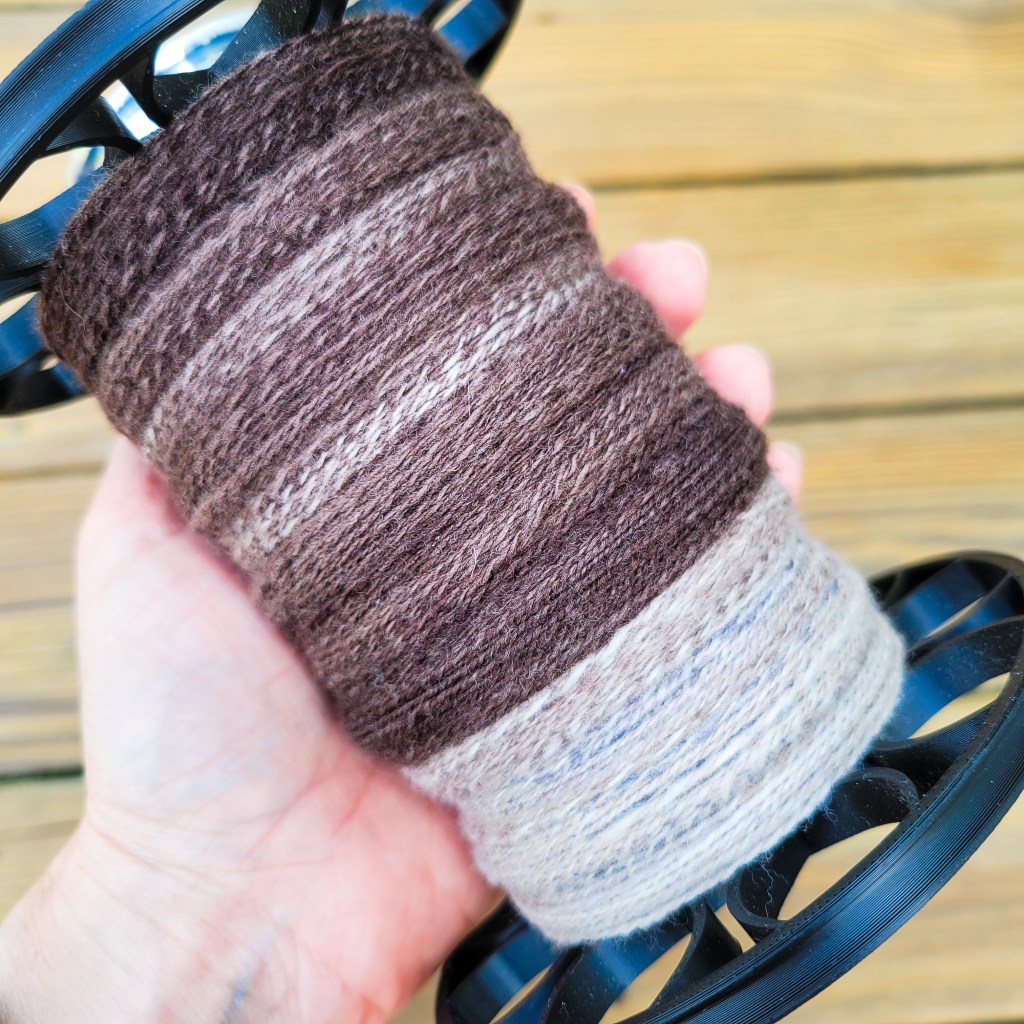
I decided to try sending the yarn back through the eSpinner a second time. This time I placed the bobbin holding the yarn further away from the wheel, to give the twist further to travel. Additionally, I listened to an audio book—rather than watching TV—so I could keep my eyes on the project in front of me. I was much happier with the results.
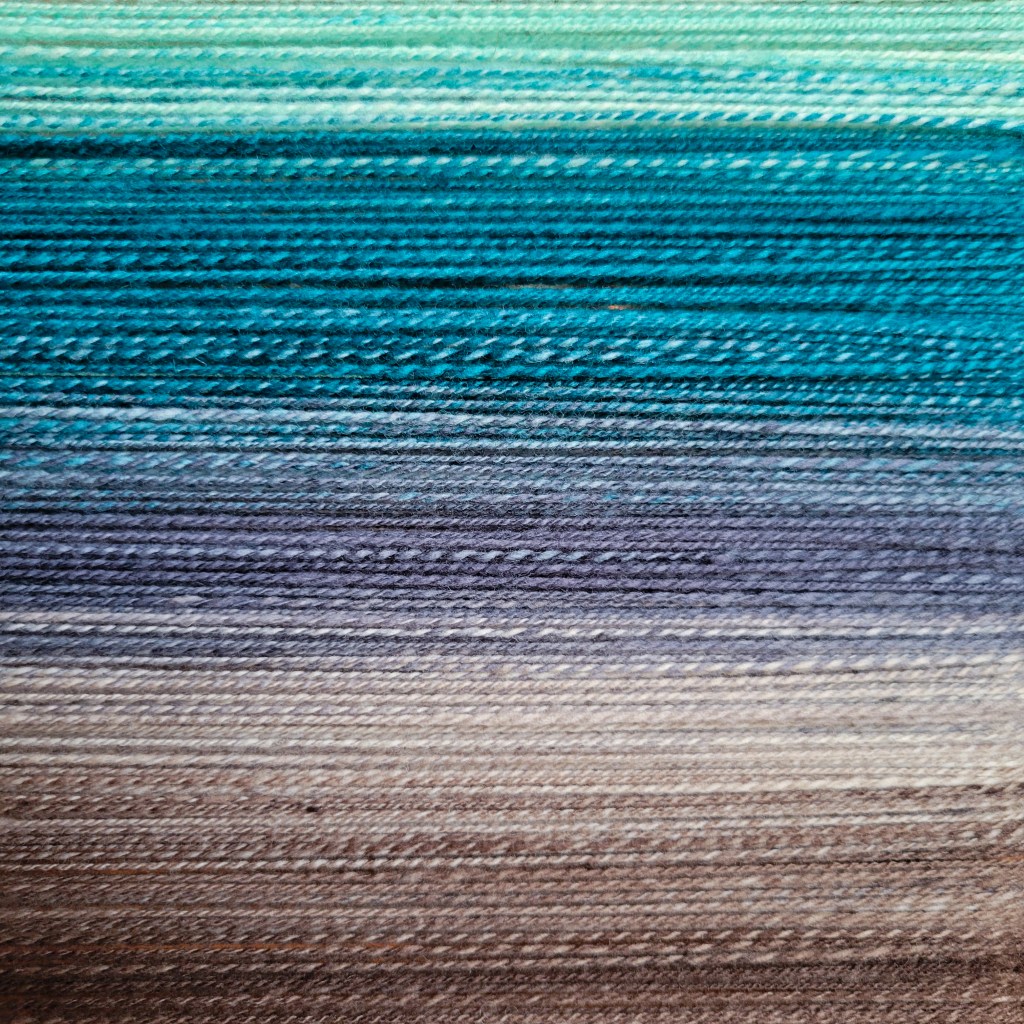
Summary:
- Started spinning 11/21/2023
- Finished spinning 12/27/2023
- Finished plying 9/5/2024—almost nine months of plycrastination
- 582 yards, two-ply at 16 WPI
- Spindles freed: four

If you haven’t already read them, here are links to my other posts for Tour de Fleece 2024:
 The Peahen's Pod
beautiful! Final skein weight was 4 ozs?
LikeLike
[…] As I sat down to write this blog post, I couldn’t recall anything that would have led to this extreme degree of plycrastination, especially compared to the previous Tour de Fleece WIPs which either had zero plan, or for which I had neglected to write down my plan. […]
LikeLike
[…] Pavlopetri […]
LikeLike
[…] Pavlopetri […]
LikeLike
[…] Pavlopetri […]
LikeLike
[…] Pavlopetri […]
LikeLike